Last Updated on February 17, 2026
This article may contain affiliate links. We may earn a small commission if you make a purchase, at no extra cost to you.
Exploring Morioka in Iwate
On a day in March, my mother and I took a day trip from Tokyo to Morioka in Iwate Prefecture, located in the Tohoku region of northern Japan. For those interested in visiting Morioka, I’d like to share its storybook-like atmosphere along with an honest look at the actual crowd levels.
Riding the Shinkansen
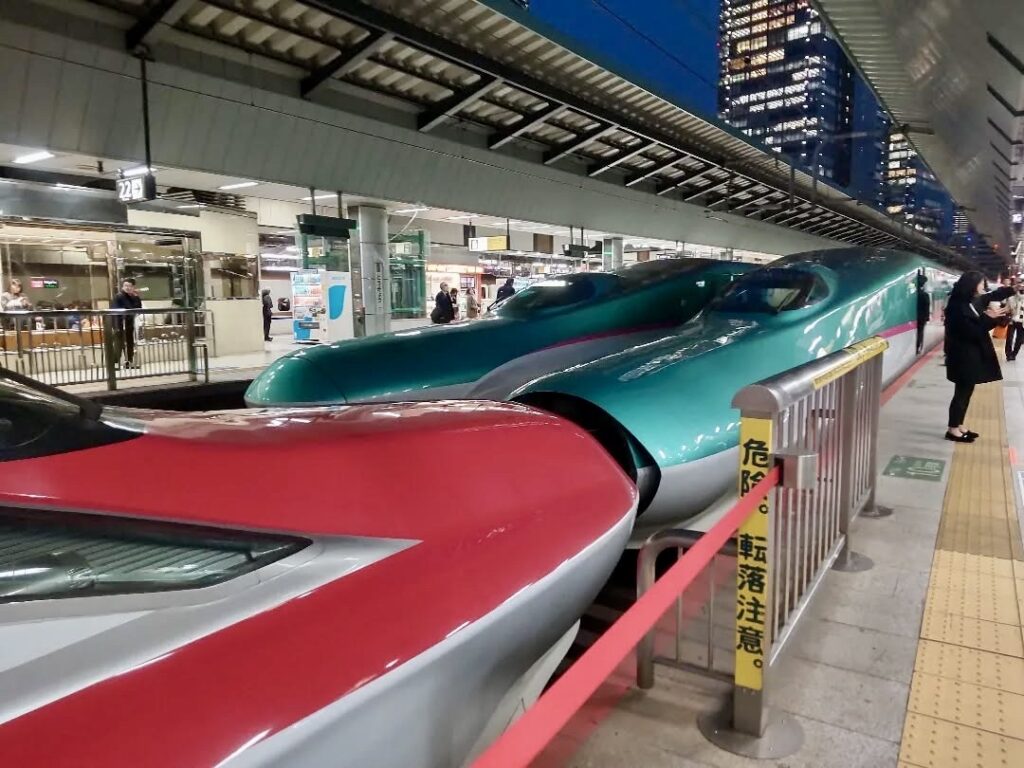
It takes a little over two hours to get from Tokyo to Morioka, Iwate, by Shinkansen. The Shinkansen is Japan’s bullet train. There are various types of trains, and it’s not only convenient for travelers but also very popular with children.
The red Shinkansen in the front is the Komachi, and the green one behind is the Hayabusa. From Tokyo to Morioka, they run coupled together. Then, at Morioka, the trains separate: the Komachi heads west to Yamagata, while the Hayabusa continues north to Aomori.
Scenic Views from the Shinkansen
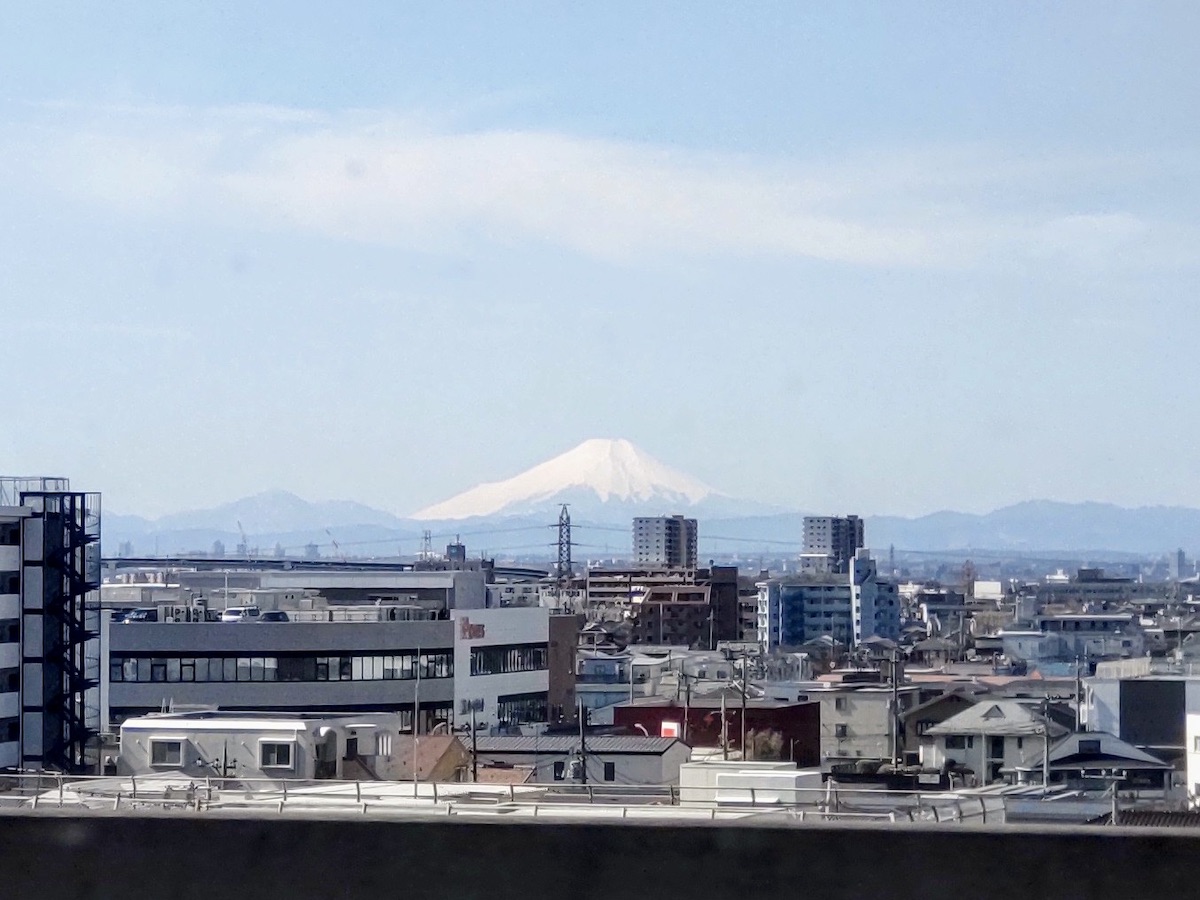
As the Shinkansen sped along, Mount Fuji, capped with snow, appeared on the left side of the train. From my seat, I could admire Japan’s iconic peak—a breathtaking sight that made the journey even more memorable. In Japan, there is a common feeling that seeing Mount Fuji clearly is a sign of good things to come, and I couldn’t help but feel the same.
Mountains in Fukushima
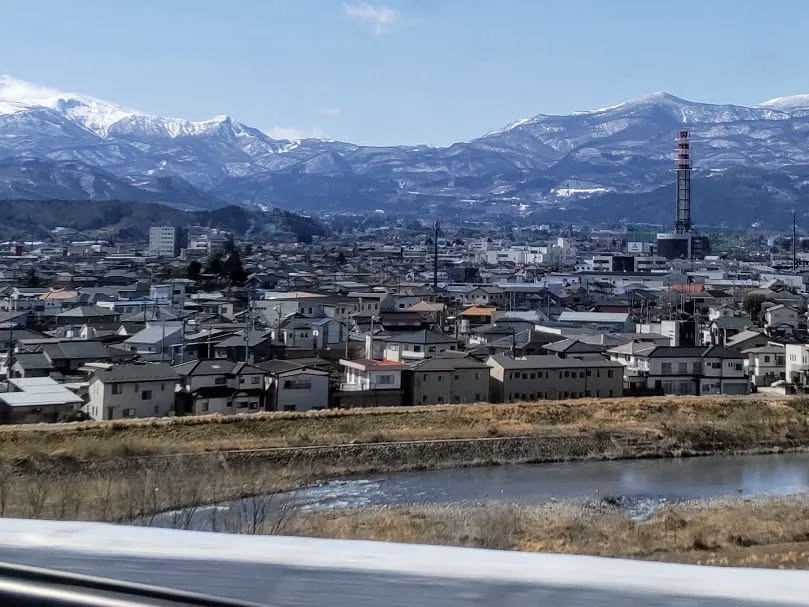
About an hour and a half after leaving Tokyo, we started to see the mountains of Fukushima Prefecture. Fukushima Station, which we passed through, was situated on high ground, and I could imagine that standing on the platform would offer an amazing view.
From my seat, towering mountains rose behind the traditional Japanese houses, while autumn-colored embankments and rivers below painted a vivid picture of Japan’s rich landscapes.
Iwate is home to Mount Iwate, which is said to be visible from around Morioka Station. I was looking forward to seeing it, but according to the weather forecast, it was expected to be cloudy in Iwate. I was grateful that we could still enjoy such beautiful scenery along the way.
Tasting Morioka’s Specialty Noodles
When we arrived at Morioka Station, we stopped at Pairon, a local restaurant inside the station building, to try Morioka Jajamen, a specialty noodle dish. It consists of flat noodles topped with a special meat miso, cucumber, green onions, and other ingredients, which you mix together before eating.
Since I had never tried it in Morioka before, I read the instructions that were placed on the table before digging in. At the end, we ordered the hot cooking water from the pot. By adding a raw egg to the remaining miso and mixing it with the steaming broth, we created a traditional soup called Chītan-tan. I hadn’t known it could be eaten this way, so it was a delightful discovery.
Jajamen is available in Tokyo supermarkets, but for me—since I don’t get to travel freely often—trying the real thing in Morioka was truly special. I wasn’t able to take a photo of the Jajamen, so I’ve included the restaurant information below.
Crowd and Waiting Situation
By the time we arrived, it was exactly noon, and there was already a long line. After waiting for about 40 minutes, we finally got a seat. We needed to be back at the station by the evening for our train, so the long wait made us feel a bit rushed. As this is a Morioka specialty restaurant right at the station, it tends to be packed with tourists. It’s best to come a bit earlier if you want to avoid the line.
Our family was waiting at home, so this ended up being just a day trip. Once we have more freedom to travel, I would love to stay overnight and truly enjoy Morioka at a more relaxed pace.
Kogen-sha
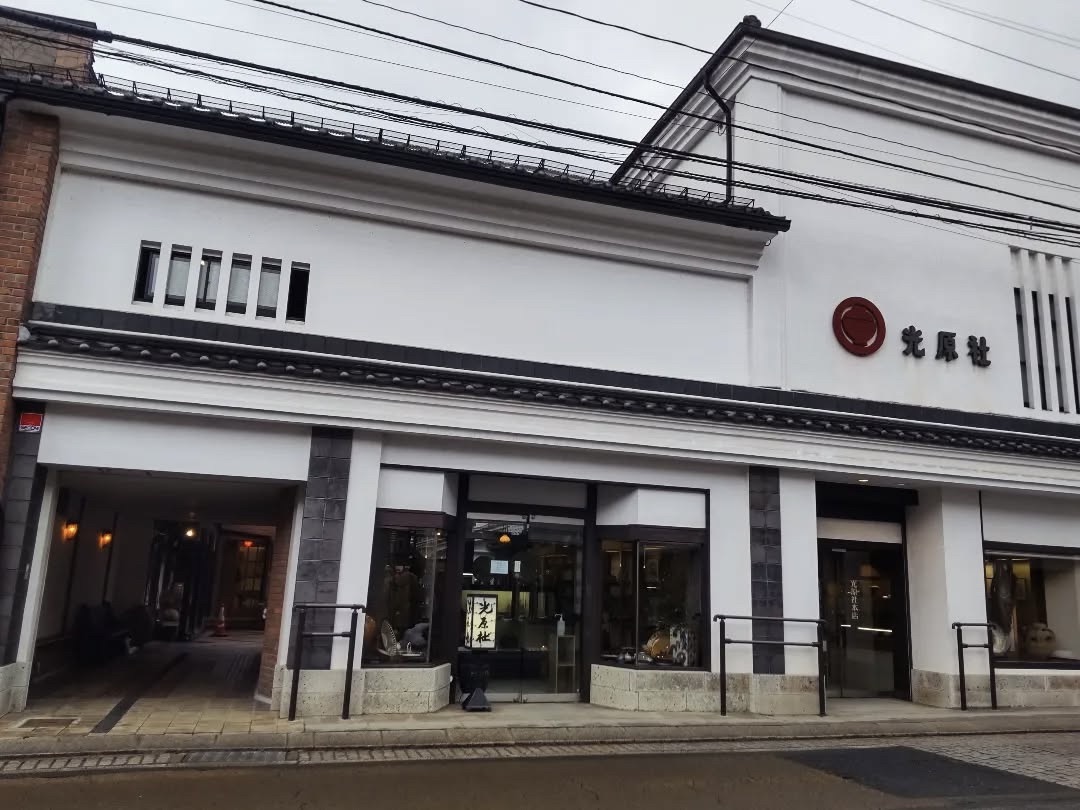
As the weather forecast predicted, it was cloudy like this, and Mount Iwate was completely hidden from view. Cheering ourselves up, we went to Kōgensha, a store that sells traditional folk crafts. The café is part of the store, and I had been looking forward to visiting it, as it was reputed to be beautiful.
Kōgensha was originally a publishing company, known for publishing the famous Japanese author Kenji Miyazawa’s “The Restaurant of Many Orders.” It moved to this area in 1937.
 A Storybook Feel
 A Storybook Feel
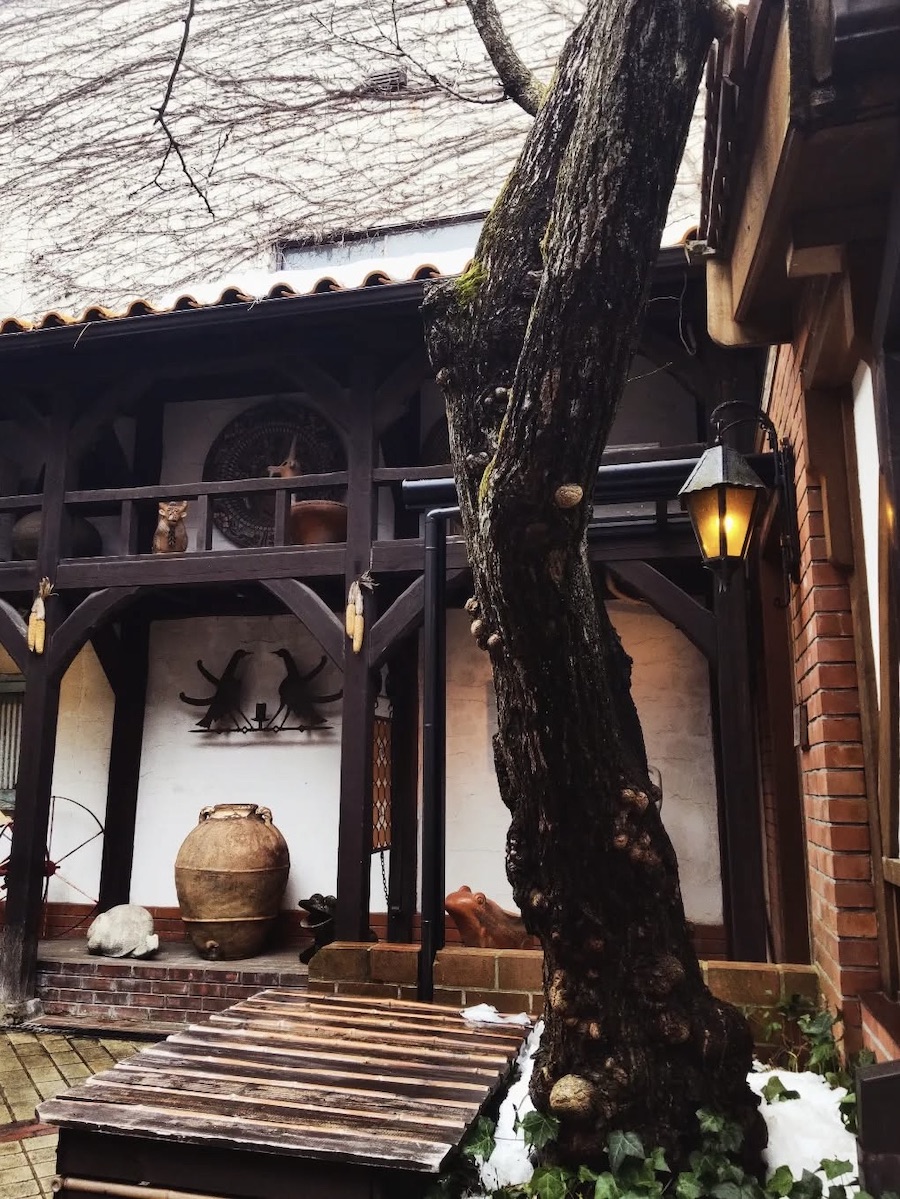
The courtyard at Kōgensha was adorned with crafts from across Japan, making the rainy day feel even more magical. I found myself lingering over each piece of folk art, imagining the hands that had carefully crafted them. After admiring these beautiful creations, we finally headed to the café we had come for, feeling wrapped in a gentle sense of time slowing down.
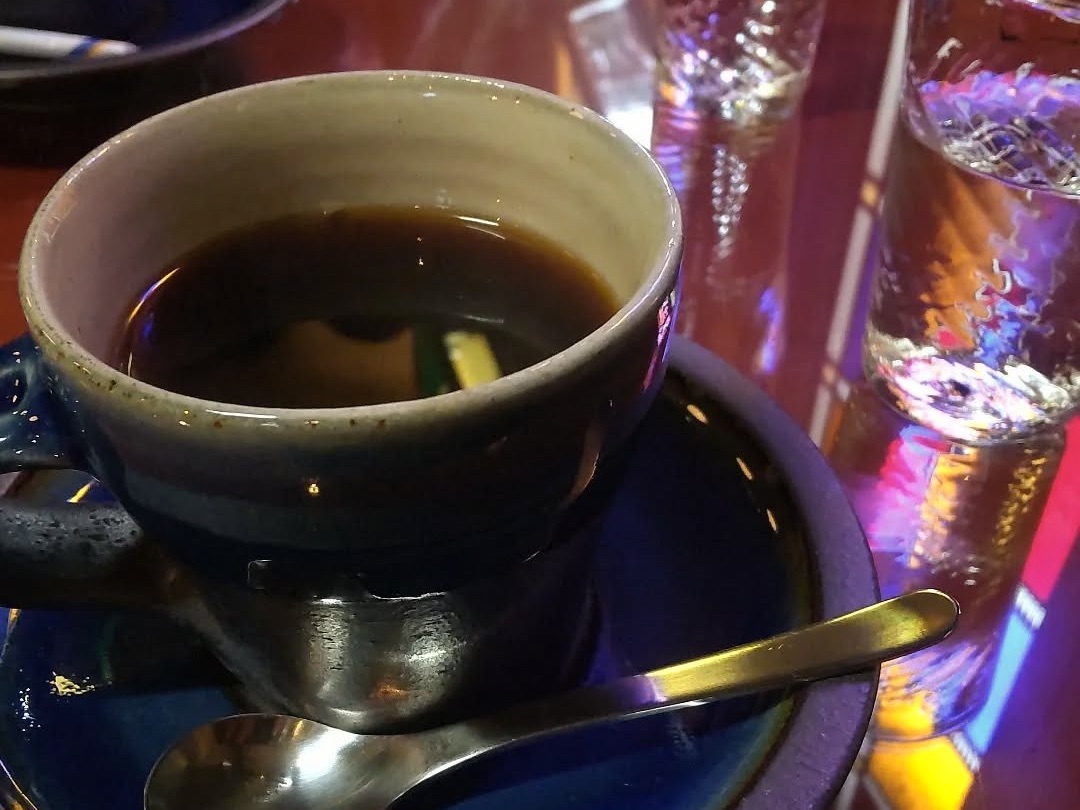
A Cozy Coffee Break
The interior of the café had a calm atmosphere, and at the counter, staffs were carefully brewing coffee. Some of the windows were made of stained glass, casting vibrant colors into the dim interior.
In Japan, water is usually served for free as soon as you sit down. The glass in the background—possibly handmade—had a warm, charming shape. The rounded edge of the glass makes it fit comfortably against your lips. The stained glass colors danced across the rippling surface of the glass, creating a truly beautiful sight.
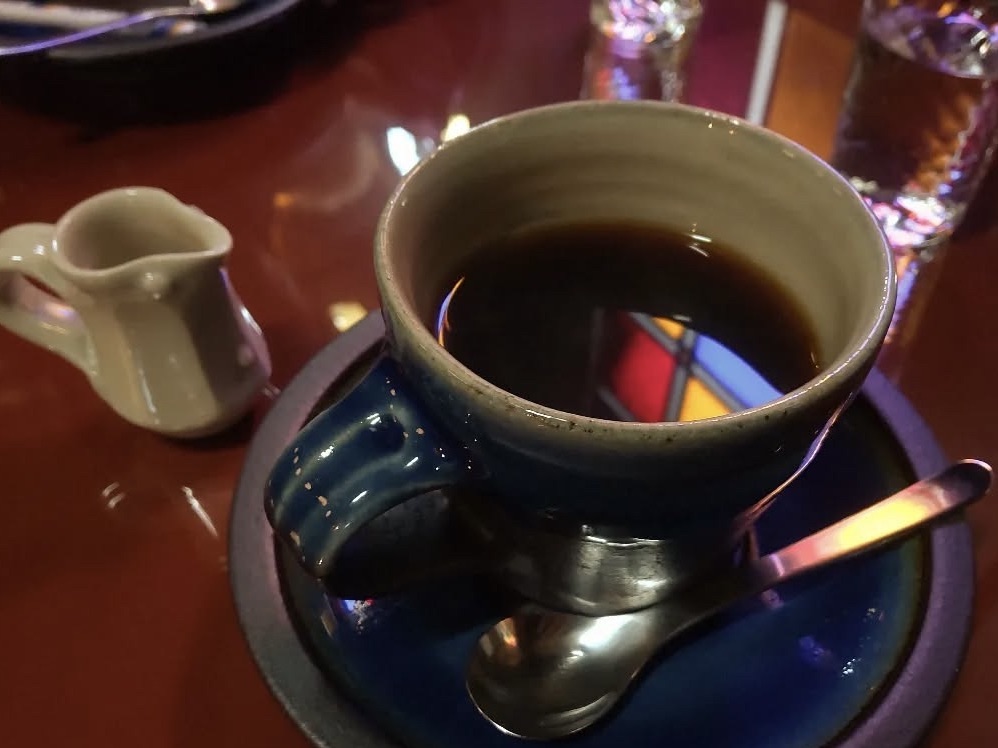
The coffee cups and the milk pitcher are rustic and cute. We occasionally sipped our coffee, catching glimpses of the stained glass reflected on it, and enjoyed a relaxing moment.
Crowd and Waiting Situation
I had read about this place online and in guidebooks, and it seemed quite popular. When we arrived, there were already about two groups waiting outside. I was surprised that we couldn’t get in right away, even on a rainy weekday. This was the second time we felt a bit rushed that day, but after waiting for about 20 minutes, we finally got a seat.
The café doesn’t offer a lunch menu and only serves coffee and small treats, so visiting right after opening or around lunchtime might be a good time to enjoy it without the crowd.
Note: Photography is not allowed inside the shop, but you are welcome to take pictures of your food and drinks.
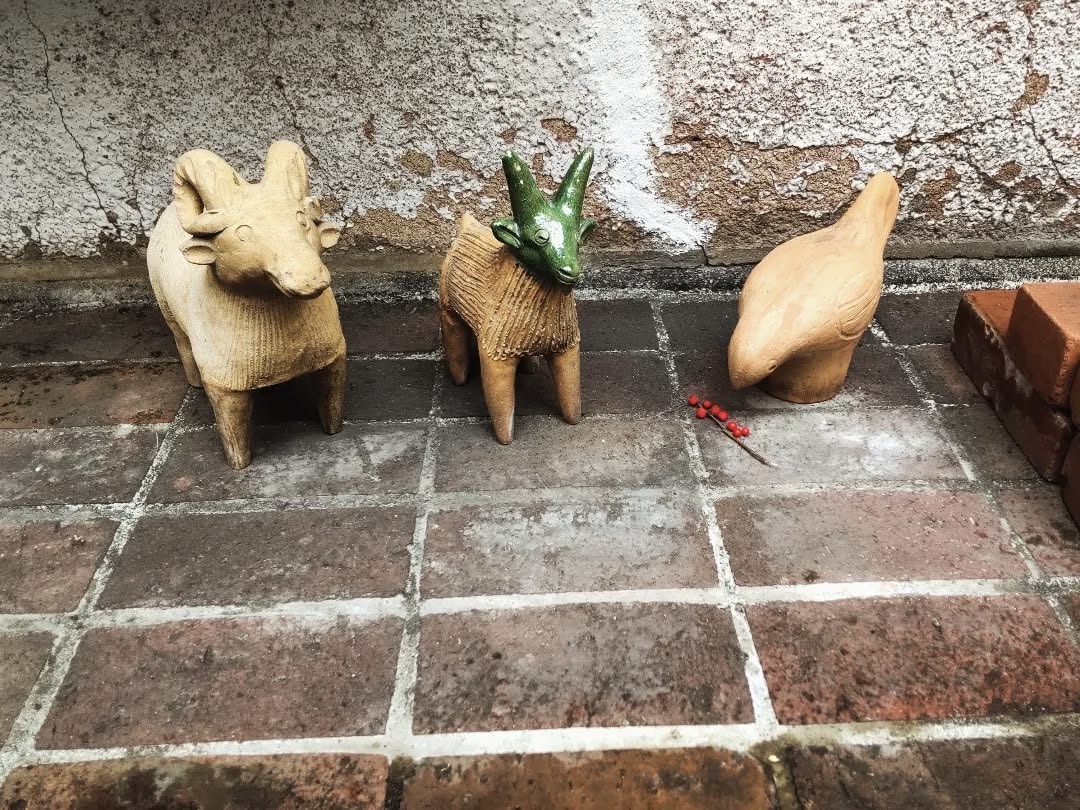
A Heartwarming Farewell
Outside the café, there was this little scene: someone had placed red berries under a small bird, creating a heartwarming moment.
Although it rained in Iwate, the places we visited perfectly suited the rainy weather. We bought some local food for our family and returned to Tokyo on the Shinkansen as planned.
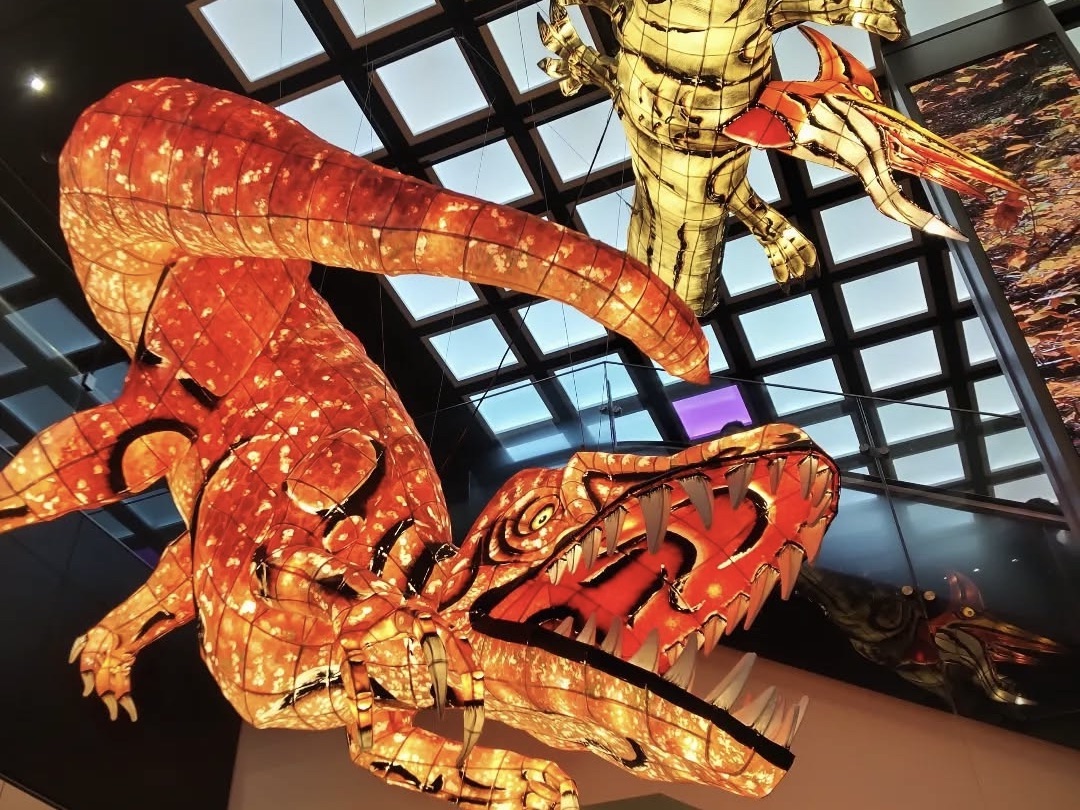
At Tokyo Station, a large washi paper dinosaurs were hanging to commemorate the extension of the Hokuriku Shinkansen to Fukui prefecture located in the Hokuriku region. Washi is traditional Japanese paper, and Fukui Prefecture is famous for Echizen washi and dinosaur fossils.
Fukui faces the Sea of Japan, and its seafood is delicious, so I’d love to visit there someday.
Information
Information, prices and exchange rates are current as of my visit but may change. Please check official sites.
Kogensya Coffee-Kan
Coffee
– ¥600 (approx. $3.8 / €3.3)
Access
– About 1970 ft (600 m) from Morioka Station
Pairon Morioka Jajang noodles
Jajang noodles
– ¥630 (approx. $4.0 / €3.5)
Chiitan-tan soup
– ¥50 (approx. $0.3 / €0.3)
Access
– First floor of Morioka Station
– Google Maps
Shinkansen Bullet Train
Klook
– Check current prices and availability.
– The reservation process is simple
JR-EAST
– Official English website
– JR is divided into six regional companies
– The Shinkansen is run by the JR companies
– Reservations are also available
– Recommended for experienced travelers
– Other travel information is also available