Last Updated on February 18, 2026
Soba Lunch
Recently, I enjoyed a relaxing soba lunch with my parents at a quiet, non-touristy soba restaurant in Chiba Prefecture, away from the usual crowds. For those interested in authentic Japanese soba, this article shares practical tips based on my experience on how to choose and enjoy soba noodles in Japan.
At Suzume An
This restaurant is a good example of a calm, local soba spot that many travelers might overlook. It sits tucked away from the tourist areas in a peaceful, quiet spot in Chiba. We drove there by car, and upon arrival, we immediately noticed its building. It is relatively new, yet the design follows a simple, traditional Japanese style.
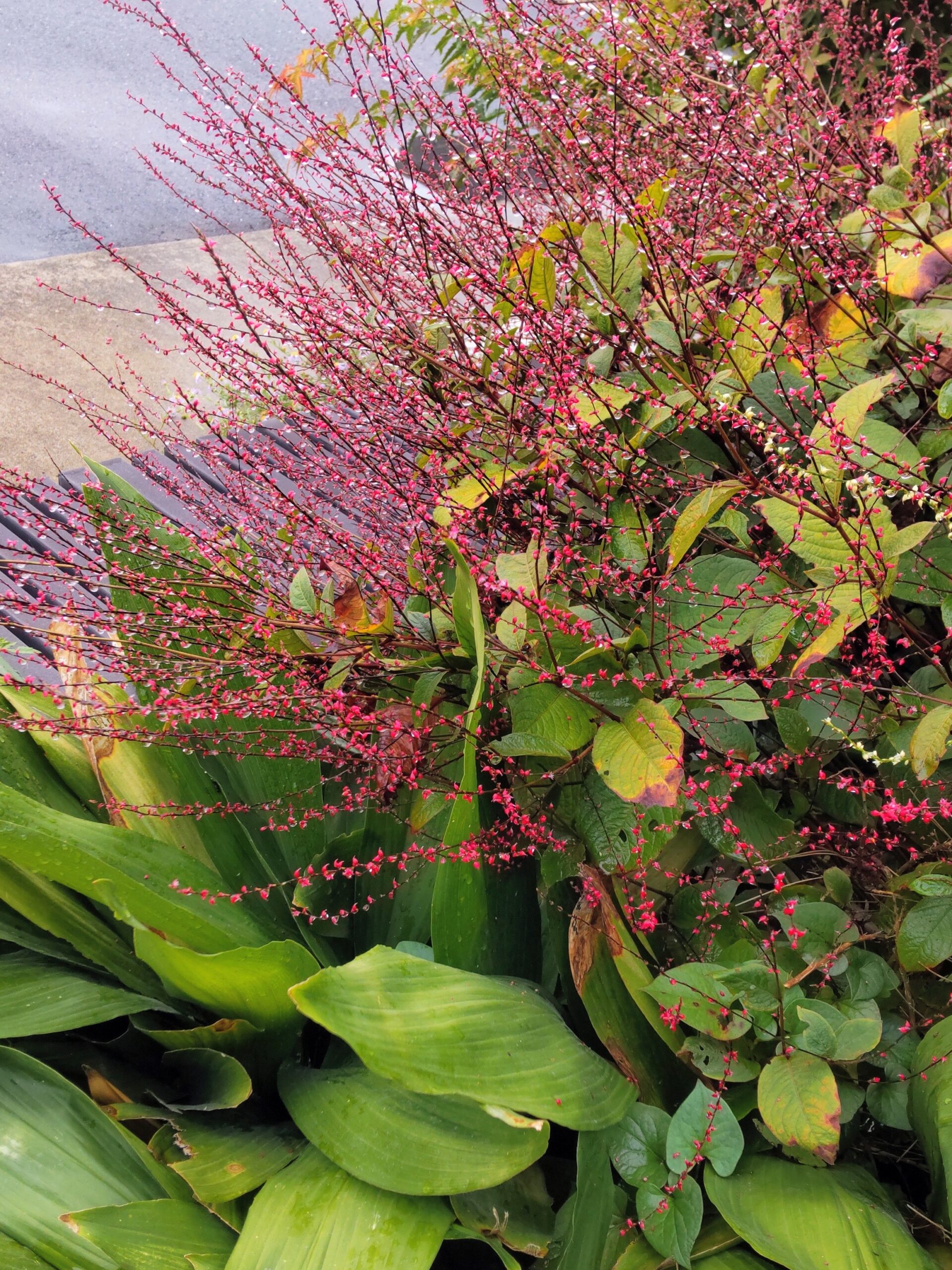
In addition, I found a small garden corner near the entrance where Mizuhiki flowers grew beautifully in the ground. Mizuhiki is a plant commonly found growing wild across Japan. The plant gets its name “Mizuhiki” because its tiny red and white flowers resemble the decorative paper cords used for Japanese gifts. On that rainy day, delicate raindrops clung to the slender stems and leaves, making the plants look even more vibrant and alive.
I couldn’t resist taking a photo, and it was so striking that it now appears on the homepage of this website. The combination of the lush greenery and the gentle drizzle created a quiet, almost magical moment that felt uniquely Japanese.
Where We Sat
When we stepped inside the restaurant, the interior felt very clean and welcoming. Our seats were in the tatami room at the back. The table had a cozy, Hori-gotatsu style.
A kotatsu is a low table with a heater underneath and a blanket draped over it to keep your legs warm in the cold season. A hori-gotatsu is a type of kotatsu with a sunken floor, allowing you to stretch your legs comfortably underneath.
We noticed a baby lying peacefully on the tatami floor, which showed how comfortable and family-friendly the space was, especially with the hori-gotatsu’s sunken floor allowing adults to stretch their legs while keeping the baby nearby.
Tip for travelers
For travelers who are not used to sitting on the floor, hori-gotatsu seating is a great option. It offers a traditional Japanese atmosphere while still being comfortable, even for longer meals. Just remember that you’ll need to take off your shoes, and be careful when standing up, as there is a space under the table for your legs.
Soba
In Japan, people classify soba noodles based on the ratio of wheat flour to buckwheat flour. This restaurant offers two varieties. One is ni-hachi soba, made with 20% wheat and 80% buckwheat. The other is ju-wari soba, which uses 100% buckwheat flour.
Ni-hachi refers to the numbers two (2) and eight (8). Wari is a traditional Japanese unit used to express proportions or percentages. Ichi(One)-wari means 10%, and Ju(ten)-wari means 100%. Ni-hachi Soba is also very popular because it offers a smooth texture that goes down easily, while still preserving the rich aroma of the buckwheat.
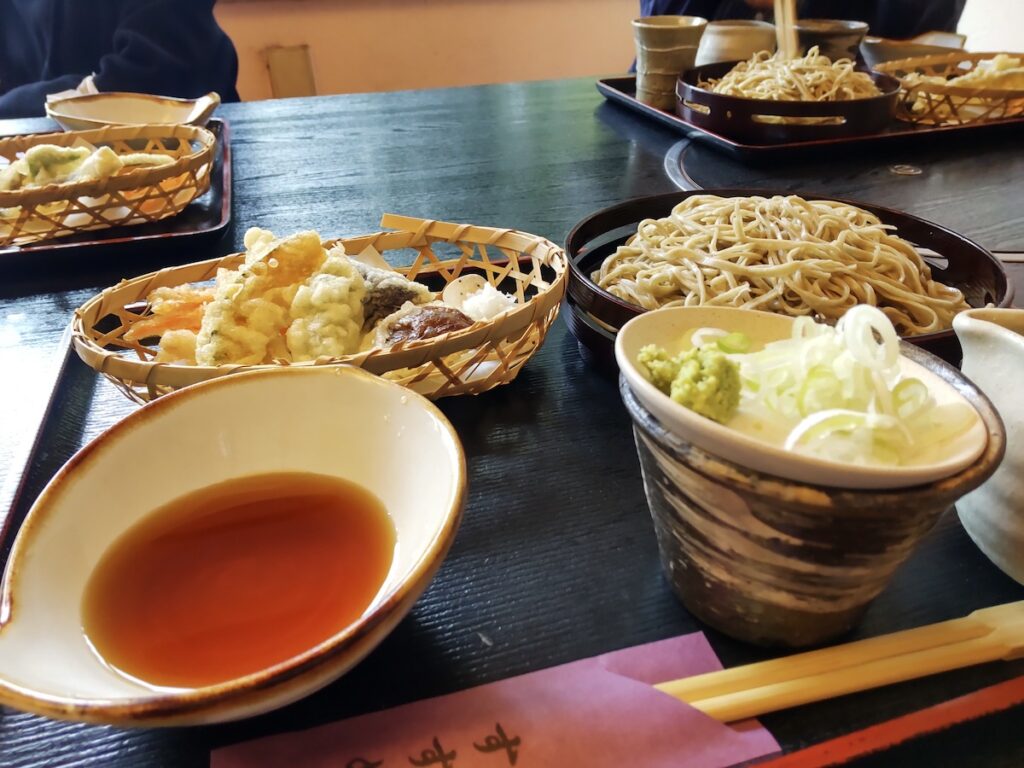
I chose the juwari soba set, which came with a side of vegetable tempura. Juwari soba, made entirely from buckwheat flour, can sometimes feel a bit crumbly since it contains no wheat flour as a binder. However, this restaurant’s skill made it surprisingly smooth and easy to swallow, and I could also enjoy the rich flavor of the buckwheat.
The juwari soba we enjoyed that day felt truly special because it used buckwheat flour harvested during this year’s peak season. In Japan, people often add the word “shin,” meaning “new,” to seasonal foods like rice, potatoes, or chestnuts to show appreciation for their fresh, just-harvested flavor. This time, the soba was called “Shin-soba.” Shin-soba is typically available from around October.
Which soba should you choose?
If it’s your first time trying soba in Japan, I would recommend ni-hachi soba because it’s smoother and easier to eat. Juwari soba is better suited for people who already enjoy the rich aroma of buckwheat. Some restaurants, like this one, offer several different types of soba, making it fun to compare and taste the differences.
Tempura
Tempura is often served as a side dish with soba noodles. By alternating between the light, refreshing taste of soba and the hot, crispy tempura, you can enjoy the meal all the way to the last bite.
The tempura I ordered, served in a basket, included carrot, eggplant, shiitake mushrooms, pumpkin, and green peppers, allowing me to enjoy a bit of each vegetable. The dishes were arranged beautifully on the tray, which enhanced the colors and textures of all the ingredients.
Condiments (Yakumi)
The soba came with green onions and wasabi, and the tempura was served with a small portion of grated daikon (Japanese raddish). These additions let us notice subtle changes in flavor throughout the meal.
At the end of the meal, we added sobayu to our dipping sauce. Sobayu is the hot water used to boil soba noodles. This traditional custom creates a warm, nutrient-rich soup to finish the meal.
Overall, it was a delicious and relaxing lunch. We were satisfied with the portion, but if you need more, you can simply order extra soba. They also seem to offer Japanese-style desserts, which I’d love to try on my next visit.
The restaurant was a bit crowded, so I decided not to take any photos inside. For your reference, I’ve included the Google Maps information below. Also, if you’re interested in more Japanese food experiences, feel free to check out the related articles.
Information
Suzume An
– Closed on Wednesdays
Tempura with upgraded soba
– ¥1,800 (approx. $11.4 / €9.7)
Who this restaurant is suitable for
- People looking for a calm lunch away from tourist crowds
- Visitors who want to experience traditional soba in a relaxed setting
- Families or older travelers who prefer a quiet atmosphere
Access
– About 0.7 mi (1.2 km) from Nagareyama Otakanomori Station
– For those without a rental car, a taxi is a convenient option
Information and exchange rates are current as of my visit but may change. Please check official sites.